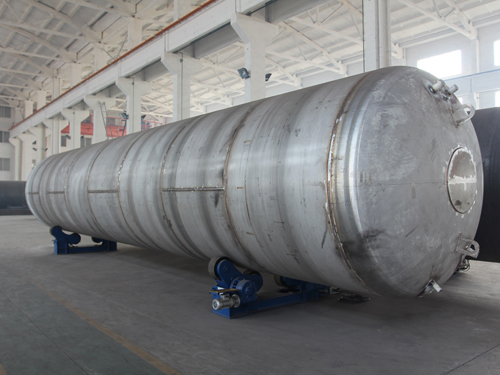
A complete guide to the maintenance points of stainless steel storage tanks
Stainless steel storage tanks are widely used in many industries, and their maintenance is very important. It can not only extend the service life of the equipment, but also ensure the safety and quality of the storage medium.
1. Appearance inspection
Regularly check the appearance of the equipment to see if there are scratches, dents, corrosion spots and other damage on the surface. These damages may cause local strength loss of the equipment and even cause leakage. Once damage is discovered, repairs should be made immediately, such as grinding, welding, etc., to avoid the problem from expanding. At the same time, check whether the supporting structure of the equipment is stable and ensure that it can withstand the design load.
2. Internal cleaning
Depending on the nature of the storage medium, clean the inside of the equipment regularly. For storing food, medicine, etc.
stainless steel storage tank, cleaning is important to prevent residue from breeding bacteria or contaminating newly stored materials. Specific cleaning agents and cleaning equipment, such as high-pressure water guns, can be used to clean out impurities and residues in the tank. After cleaning, make sure the tank is dry to avoid residual moisture causing corrosion.
3. Seal inspection
Sealing performance is key to storage tanks. Regularly check whether the gaskets on tank lids, pipe connections, flanges, etc. are aged or damaged. If the seal is found to be worn or deformed, it should be replaced in time to avoid leakage. At the same time, check whether the sealing bolts are tight and retighten them if necessary to ensure the sealing effect.
4. Accessory maintenance
Check whether the pressure gauge, safety valve and other accessories on the equipment are working properly. Pressure gauges should be calibrated regularly to ensure accurate readings; safety valves need to be tested regularly to ensure they can open normally in the event of overpressure. For equipment with stirrers or heating devices, the operating status of these equipment also needs to be checked to ensure that they are working properly.
5. Anti-corrosion measures
Although stainless steel has good corrosion resistance, it can still be corroded in certain environments. Regularly check whether the anti-corrosion coating on the surface of the equipment is complete. If the coating is found to be peeling or damaged, it should be repaired in time. In addition, avoid exposing equipment to moisture or corrosive environments for extended periods of time and take protective measures when necessary, such as building awnings or installing anti-corrosion coatings.
Through the above maintenance points, the safe operation of stainless steel storage tanks can be effectively guaranteed, their service life can be extended, and the quality and safety of the storage medium can be ensured.

 Storage tanks and tower series