The Evolution and Industrial Impact of Modern Robotic Arms
The landscape of manufacturing has fundamentally transformed over the past decade, with robotic arms emerging as cornerstones of automation across virtually every industrial sector. These sophisticated mechanical systems represent the convergence of precision engineering, advanced software algorithms, and artificial intelligence, enabling factories and production facilities to achieve unprecedented levels of efficiency, consistency, and output quality. As industries worldwide continue to embrace Industry 4.0 principles, understanding the capabilities, applications, and future trajectory of robotic arms becomes essential for businesses seeking competitive advantages in an increasingly demanding global marketplace.
Modern robotic arms distinguish themselves through remarkable technical specifications that continue pushing the boundaries of what automated systems can accomplish. Contemporary six-axis industrial robots typically offer payload capacities ranging from 3 kilograms to over 1,000 kilograms, with reach distances spanning from 500 millimeters to beyond 3,500 millimeters. Repeatability precision has achieved tolerances as fine as ±0.02 millimeters in high-performance models, enabling applications that demand microscopic accuracy in component placement and assembly operations.
Degrees of freedom represent another critical specification determining a robotic arm's versatility. A standard six-axis robot provides movement capabilities across six independent rotational joints, simulating the range of motion found in a human arm and allowing complete positioning freedom within three-dimensional workspace. Some specialized configurations extend to seven or eight axes, providing enhanced flexibility for complex tasks in constrained environments where traditional six-axis systems would encounter kinematic limitations.
Cycle times have similarly seen dramatic improvements, with modern servo motors and advanced motion control systems enabling acceleration rates that reduce production bottlenecks significantly. Advanced trajectory planning algorithms optimize movement paths in real-time, minimizing unnecessary motion while maximizing throughput. These technical advances collectively enable robotic arms to perform thousands of repetitive operations daily with consistency that human workers cannot sustain over extended periods.
The automotive industry remains one of the largest adopters of Robotic Arm technology, with major manufacturers integrating these systems throughout their production facilities. Robotic arms perform critical tasks including spot welding, where they execute thousands of precise welds per vehicle with consistent quality and speed. Paint spraying applications utilize robotic arms equipped with specialized end-effectors that ensure uniform coating thickness while minimizing overspray and material waste. Assembly operations such as bolt fastening, component installation, and quality inspection have similarly been transformed by robotic automation, reducing production times while improving product consistency.
Electronics manufacturing presents unique challenges that robotic arms address effectively through specialized configurations. Surface mount technology assembly lines employ compact robotic systems capable of placing components weighing mere grams onto circuit boards with sub-millimeter accuracy. These systems operate within cleanroom environments, handling sensitive semiconductor devices without contamination risk while maintaining the speed required for high-volume production runs. The electronics sector benefits particularly from robotic arms' ability to work continuously without the fatigue-related errors that can plague human operators performing repetitive precision tasks.
Healthcare and pharmaceutical industries have discovered valuable applications for robotic arms in environments requiring sterile conditions and absolute precision. Surgical robots equipped with micro-scale robotic arms enable minimally invasive procedures where human hands could not achieve the necessary precision. Laboratory automation systems employ robotic arms for sample handling, liquid transfer, and specimen processing, reducing contamination risks while increasing throughput for diagnostic testing and research applications.
The next generation of robotic arms promises capabilities that will further revolutionize industrial automation. Artificial intelligence integration enables machines that learn from experience rather than requiring explicit programming for every variation in task execution. Machine vision systems mounted on robotic arms provide environmental awareness, allowing systems to adapt to component variations, identify defects, and make real-time decisions during operation. These advances move robotic automation beyond simple programmed repetition toward genuinely intelligent manufacturing assistance.
Collaborative robotics represents another transformative development, with modern robotic arms designed to work safely alongside human operators without protective barriers. Force-limiting sensors detect unexpected contact and immediately halt motion, preventing injury while enabling direct human-robot collaboration on tasks requiring human judgment combined with robotic strength and precision. This capability opens new possibilities for applications where complete automation proves impractical or undesirable, enabling hybrid workflows that leverage the unique strengths of both human workers and robotic systems.
Cloud connectivity enables centralized monitoring and optimization of robotic installations across multiple facilities, with aggregated data informing continuous improvement initiatives and predictive maintenance schedules. Remote diagnostics allow specialists to troubleshoot issues without physical presence, reducing downtime while enabling expertise distribution across global operations. These connectivity advances transform robotic arms from isolated workstations into integrated components of comprehensive digital manufacturing ecosystems.
Robotic arms have evolved from simple programmable machines into sophisticated systems that define contemporary industrial capability. With continued advancement in artificial intelligence, sensor technology, and materials science, these machines will assume an even more central role across manufacturing, healthcare, logistics, and numerous other sectors. Organizations investing in robotic arm technology position themselves to achieve superior productivity, quality, and flexibility while building foundations for sustained competitive success in rapidly evolving global markets.

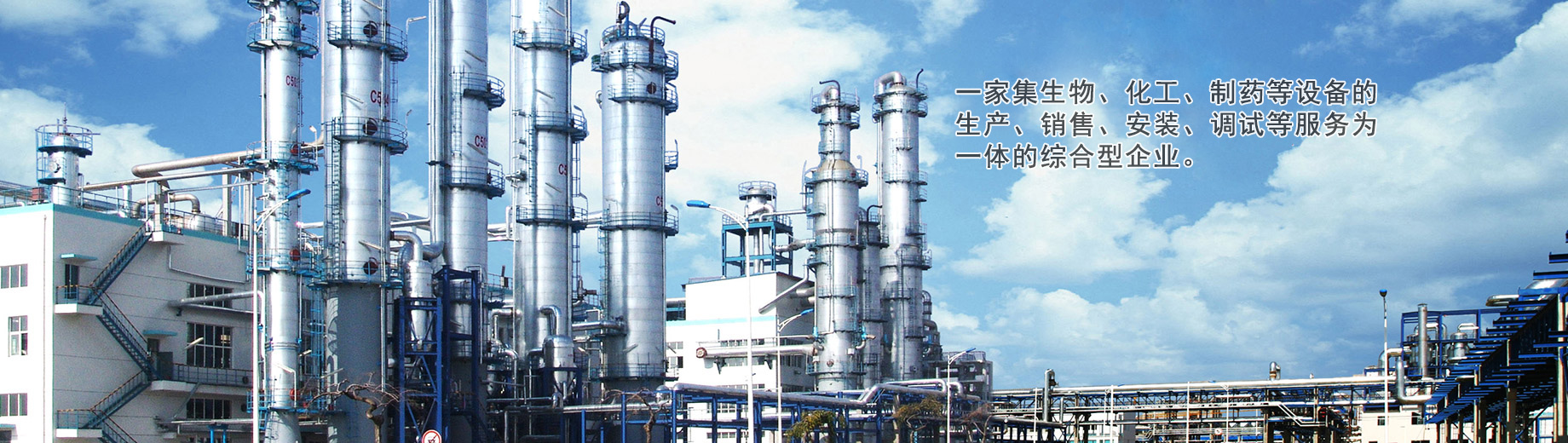
 Storage tanks and tower series