Tank Nozzle Selection Guide: Comparing Sizes, Materials And Connection Types
A tank nozzle is the small fitting that looks like a detail on a general arrangement drawing, yet it is where the process line, the vent, the level gauge and the drain all meet the tank shell. Choose it badly and the consequences are familiar: slow transfer through a starved nozzle, loss of product through an undersized vent, contamination traced back to a poorly sealed manway, or a flange that starts weeping the moment the vessel is full and holding pressure. For stainless steel tanks, welded carbon steel vessels and moulded plastic storage tanks alike, the nozzle set is where a surprising amount of the real operating risk is concentrated.
This guide sets out how tank nozzles are classified, how connection style, material, size and sealing differ between the options, and how to build a specification that survives contact with a fabricator and an operating plant. The figures given are typical ranges that depend on working temperature, pressure, fluid compatibility and tank geometry, and they should always be confirmed against the project data sheet and the storage media being handled.
What A Tank Nozzle Is And Why It Matters
A tank nozzle is a short pipe stub, or a short flanged pipe neck, welded or otherwise permanently fixed through the tank shell so that a pipe connection, a valve, an instrument or a closure can be made to the vessel.
- Fill and transfer nozzles carry product into and out of the tank, including bottom draw-off connections.
- Vent connections allow air in and out as liquid level changes, or carry a breather for chemical storage.
- Level and gauging nozzles carry float or radar type instruments, sight glasses and calibration taps.
- Instrument and inspection openings provide manways, sampling points and thermowell or transmitter connections.
- Relief connections interface with pressure and vacuum relief devices where the vessel can be exposed to filling, emptying or thermal breathing.
Each of these duties has a different flow rate, pressure duty and cleanliness requirement, so the nozzle set has to be designed as a system rather than picked one fitting at a time.
How Tank Nozzles Are Classified By Connection Type
The first cut when comparing nozzles is the connection, because it decides whether the joint can be made and broken on site, and how much of the vessel has to be opened up to fit it.
| Connection type | Typical size range | Best suited to | Practical note |
|---|
| Threaded NPT or BSP | DN10 to DN80 | Small drains, gauges and auxiliary taps | Fast to install; sealing depends on compound and clean threads |
| Socket weld | DN15 to DN100 | Permanent connections needing a compact smooth bore | Needs internal access for root purge and weld inspection |
| Butt weld | DN25 to DN300 | High duty, high temperature and fully welded piping | Matches the pipe schedule; preferred for permanent plant piping |
| Flanged nozzle neck | DN25 to DN300 | Process connections and instruments needing periodic dismantling | Bolts can be tightened on site; gasket choice becomes critical |
| Quick opening clamp | DN50 to DN600 | Loading and unloading openings needing fast turnaround | Leak tight closure without tools; depends on gasket and clamp tension |
| Sanitary clamp or ferrule | DN25 to DN100 | Food, beverage, pharmaceutical and hygienic duties | Easy to clean and does not trap product in the bore |
For a permanent process line, a welded connection gives the most reliable seal.
Material Selection For Tank Nozzles
Nozzle material is usually matched to the tank shell so that no galvanic couple or differential corrosion rate is created at the weld. But the material grade alone tells only part of the story.
| Nozzle material | Typical application | Selection notes |
|---|
| 304 or 304L stainless | General water, food grade and light chemical service | Low carbon 304L is preferred for welded work to limit sensitization |
| 316 or 316L stainless | Chloride bearing media, salt water and many process chemicals | Molybdenum bearing grade with better pitting resistance than 304 |
| Duplex stainless | Aggressive chloride duties at higher pressure | Higher strength permits thinner walls; depends on chloride level and temperature |
| Carbon steel | Vegetable oil, fuel and general non corrosive service | Coated, lined or otherwise protected; nozzle bore and weld match the tank wall treatment |
| PVC, PP or FRPP | Acid, alkali and corrosive duties on plastic tanks | Compatibility chart governs; temperature ceiling far below metal practice |
| HDPE or welded polyethylene | Large volume low pressure chemical storage | Non metallic and light; carries flanged or threaded plastic nozzle patterns |
Note that the grade used on the nozzle is often upgraded relative to the shell, particularly on 304 tanks handling washdown chemicals, and that plastic tank nozzles must never be judged by the same temperature and pressure envelope as stainless fittings.
Sizing The Nozzle Bore For The Duty It Serves
Nozzle sizing is a flow calculation, not a rule of thumb.
| Service | Typical nozzle size range | Reasoning |
|---|
| Sampling, small drain, gauge tap | DN15 to DN25 | Low volume; smaller bore limits dead volume and product loss |
| Routine transfer and filling | DN25 to DN50 | Balances transfer time against shear and the cost of a larger penetration |
| High volume transfer or pump line | DN50 to DN100 | Delivers the required flow at a workable line velocity |
| Vent and breather | DN50 to DN150 | Must pass the maximum fill or empty rate; restriction here causes tank deformation |
| Pressure and vacuum relief | DN50 to DN100 | Matched to the relief device discharge rating rather than to the process line |
| Manway and inspection opening | DN300 to DN600 | Set by personnel access, bunding and cargo handling requirements |
| Level instrument connection | DN25 to DN50 | Instrument housing, float and stilling tube dimensions dictate the bore |
A useful sanity check is that pressure loss in a turbulent line varies roughly with the fourth power of the flow rate, so doubling the bore of a restricted nozzle can cut its pressure drop by a large factor.
Pressure, Temperature And Sealing Of Nozzle Joints
Every nozzle joint has three ratings that must agree with each other: the rating of the flange facing, the rating of the gasket, and the working condition of the vessel.
| Gasket type | Media it suits | Service notes |
|---|
| EPDM | Water, steam, glycol and many oils | Good ageing and chemical resistance; avoid with strong oxidising acids and hydrocarbons |
| NBR | Oils, fuels and general hydrocarbons | Good oil resistance, weaker against ozone and strong ultraviolet exposure |
| PTFE | Almost all acids, alkalis and solvents | Excellent chemical resistance; needs controlled compression because the material creeps |
| PTFE envelope with stainless spring | High pressure chemical and thermal cycling service | Spring recovers compression and tolerates slight flange misalignment |
| Spiral wound with graphite or PTFE | High temperature steam, hot oil and aggressive media | Metallic core gives resilience and blow out protection |
Temperature matters as much as chemistry.
Functional Tank Nozzle Types And Their Design Points
Beyond the connection and material, nozzles are usually scheduled by the function they perform. The table below is a practical checklist that a tank fabricator or an end user can work from when reviewing a vendor drawing.
| Nozzle function | Primary duty | Design point to verify |
|---|
| Product inlet | Fill the vessel | Whether a restriction or diffuser is fitted to limit surge, foam and splash |
| Bottom outlet or drain | Empty the vessel fully | Position at the lowest point, and whether a separate sludge drain is provided |
| Vent | Equalise pressure during filling and emptying | That the vent is never restricted by insulation, a mesh cover or an unrated accessory |
| Relief device connection | Protect against overpressure and vacuum | Device selection is a separate calculation from nozzle sizing |
| Level gauge nozzle | Carry float, radar or ultrasonic instruments | Immersion length, stilling tube arrangement and the instrument mounting thread |
| Thermowell nozzle | Carry a temperature sensor | Immersion depth and thermowell material against the medium |
| Manway and sampling nozzle | Allow entry and product withdrawal | Opening size, closure method and the seal arrangement under pressure |
Tank Nozzle Options For Stainless Steel And Plastic Tanks
Stainless steel and plastic tanks look similar from a distance but their nozzle details are almost entirely different, because the fabrication route is different.
| Feature | Stainless steel tank nozzle | Plastic tank nozzle |
|---|
| Fixing method | Welded stainless neck with full penetration weld, then flanged or threaded adapter | Threaded or bonded flange on a moulded boss, or socket welded on welded polyethylene tanks |
| Size range | DN15 to DN600 and above | DN25 to DN200 in most standard designs |
| Temperature duty | Wide, governed by grade and wall thickness | Limited, commonly close to ambient with a modest margin set by the resin |
| Chemical compatibility | Broad for 316, but strong acids and chlorides need review | Governed by a resin compatibility chart for each media and concentration |
| Sealing | Gasket between machined flange faces, with reuse rules | Gasket or sealant depending on design; flange bolts normally stay accessible |
| Surface finish | Polished to a defined roughness for hygienic duties | Moulded or fused surface, no polishing required |
What To Put On The Tank Nozzle Purchase Order
A one line entry such as nozzle DN50 is not a specification. The following items should appear on the order so that the delivered nozzle can be checked on arrival and installed without surprises.
- Nominal size and standard for the bore, so that mating pipe and flange are unambiguous.
- Connection type, including whether a neck is welded and whether a flange is fitted at the tank side.
- Flange facing, such as raised face, flat face or ring type joint, and the matching rating class.
- Material and grade of both the nozzle body and the flange.
- Wall thickness or schedule of the neck, especially where it is exposed to impact or where a reinforcement pad is used.
- Gasket material and hardness supplied for the first closure.
- Service duty, including the medium, concentration, working temperature and design pressure.
- Orientation and projection, giving the clock position and the height of the nozzle face above the tank shell.
- Marking for material traceability and for the manufacturer weld identification.
Including orientation matters more than teams expect. A nozzle scheduled at the wrong clock position can end up behind a wall, under a platform stair, or in the path of a delivery hose.
Installation Errors That Cause Leakage And Downtime
Most nozzle problems originate at installation rather than at the factory.
- Heat contamination from grinding or welding nearby carbon steel parts can initiate rusting of a stainless nozzle.
- Over tightening flanges with a full face gasket can buckle the gasket and reduce its life.
- Misalignment between the nozzle flange and the mating pipe flange forces the gasket into a wedge shape.
- Missing isolation between a nozzle and the tank shell means that any repair requires draining the whole vessel.
- Undersized vents that are later throttled by a valve or a temporary cap, which is a frequent commissioning mistake.
On plastic tanks the equivalent mistakes involve applying heat near a thermoplastic boss, using a sealant that is not compatible with the stored media, and installing a metal threaded adapter into a moulded thread without checking the sealing face.
Conclusion
Tank nozzle selection is straightforward once the decisions are taken in the right order.
For buyers comparing suppliers, the useful questions are simple. Ask which metal grade is offered for each nozzle, whether the vent is sized against the fill rate, whether reinforcement pads are shown on the drawing, and whether the quotation includes gaskets and bolt sets for the first closure. A supplier who answers those questions with drawings rather than with adjectives is a supplier whose nozzle set will work on the day the tank goes into service.

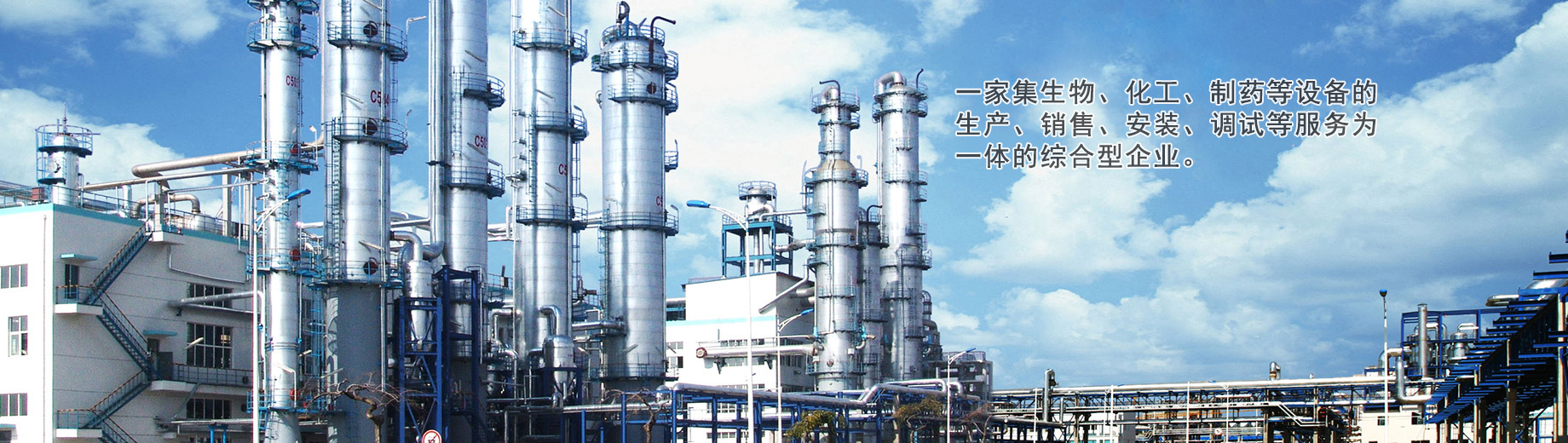
 Storage tanks and tower series