Water Tank Applications: Supporting Water Supply And Process Water
The Water Tank as a Buffer Between Supply and Demand
A water tank is easy to specify badly. Its real job is to absorb the gap between a variable demand and an intermittent supply. A process that draws in bursts, a fire system that must deliver a sustained flow, and a pump skid that cannot run continuously all need a reservoir. The tank turns an erratic source into a steady supply..
Why Buffering Volume Matters
Sizing is a balance. Too small and the tank merely shuttles water: the outlet pump cycles every few minutes, which wears the pump, swings pressure and temperature at the point of use and raises stagnation risk.
Working Volume Versus Nominal Capacity
Vendors quote nominal capacity, but the number that matters is working volume: nominal capacity less freeboard below the overflow, less the unfilled volume above the working level, and less volume taken by fittings. A 100 m3 nominal tank may deliver only 88 to 92 m3 of usable storage. Specify the working level, overflow level and low suction cut-off so the shell is sized correctly.
Water Tank Application Families
Industrial water tanks fall into a few application families, and the duty dictates material, lining and access before size.
| Application | Key requirement | Usual configuration |
|---|
| Potable, domestic | Hygiene, no contamination | Closed 316L stainless |
| Fire fighting water | Reserve volume, flow | Large vertical lined steel |
| Process, make-up water | Temperature, chemistry | Closed vented stainless |
| Cooling tower, closed loop | Thermal inertia, recirculation | Closed steel or FRP |
| Boiler feed, DI, ultra-pure | Temperature, low contamination | Closed 316L sanitary |
| Rainwater, irrigation, standby | Sediment, low cost | Panel FRP or lined steel |
Potable, Fire Fighting and Process Water
Potable storage carries the tightest constraints: potable grade materials, no contaminant ingress, cleanable internal surfaces. Fire fighting storage is governed by volume and reserve availability, not chemistry. Process and make-up water sits between the two: chemically clean but not for consumption, so materials are chosen for temperature and corrosivity rather than potable certification, though contamination still matters because the water reaches the product.
Water Quality Drives Material Selection
Water quality is the largest factor in material choice. Four variables dominate: dissolved chlorides, hardness, microbiological load and temperature.
| Water condition | Main risk | Recommended material |
|---|
| Potable, cold, low chloride | Microbial growth | 316L stainless or FRP |
| Potable, hot above 60C | Lining failure, scale | Insulated 316L |
| High chloride, seawater | Pitting, crevice corrosion | 316L or GRP |
| Hard water, hot service | Scale on shell | 316L or lined steel |
| RO or deionised water | Surface contamination | 316L electropolished |
| Mild, ambient | General corrosion | Epoxy lined steel or FRP |
Chlorides, Hardness and Temperature
Chlorides are the aggressive species because they break down the passive film on stainless steel. 304 is generally unsuitable above roughly 200 mg/L chloride; 316L holds the practical limit near 1000 mg/L, and seawater needs a higher alloy stainless or GRP. Hardness matters less for corrosion than scale: in hot service, calcium and magnesium precipitate on the shell and foul heaters. Temperature sets the ceiling, since many epoxy coatings are rated only to 40 or 50C, so hot duty needs an insulated stainless shell. Microbiological load drives geometry, since closed smooth vessels disinfect more easily.
Tank Type Versus Water Duty
The geometric choice follows the duty and the site, not habit.
| Tank type | Suited water duty | Watch-outs |
|---|
| Vertical atmospheric steel | Process, utility, fire water | Corrosion, coating decay |
| Vertical stainless 316L | Potable, purity, hot water | Cost, welding |
| Panel or modular FRP | Large volume, fast install | Seam integrity, UV |
| Elevated tower tank | Gravity distribution | Structural loads, foundation |
| Horizontal, insulated | Pressure, hot water | Surface area, expansion |
| Baffled or agitated tank | Blending, dosing, mixing | Short circuiting |
Hydraulics, Access and Instrumentation
Every tank needs defined connections, and omissions cause commissioning problems. The overflow must sit above the working level and be sized for maximum inflow. A combined pressure and vacuum valve stops the shell collapsing when water is drawn out under vacuum and keeps insects out. The inlet needs an isolation valve and a non-return device against back-pressure. Access means a manway large enough for a person, safe ladder access and a platform above 3 m. Footprint counts too: a vertical tank on a plinth leaves little room to inspect the shell, while panel tanks sit against walls.
Level instrumentation makes a tank controllable. Fit a high-high switch that stops the fill pump and a low-low switch that stops the duty pump before it draws air. For critical service, a radar or guided wave transmitter gives remote indication with better accuracy than a float switch. Two details are often missed: take the outlet from a low point on the shell, not a sediment trap, and fit a drain valve.
Hygiene, Disinfection and Stagnation Control
Opportunistic organisms multiply in warm, still water, typically between 20 and 45C, and a tank with a wide turnover range stratifies so the outlet runs cooler than average. The practical measures are clear: keep the tank as close to full as possible, since a part-filled vessel mixes air with water and encourages growth; remove dead legs and dead zones at fittings and the nozzle; hold stored water below 20C or above 60C; and where a hygiene regime applies, run a validated disinfection cycle with a measured chlorine residual.
Energy Losses, Insulation and Open Versus Closed Tanks
A stored water tank is a heat exchanger with its surroundings. In an uninsulated vessel, evaporation and conduction losses from a hot charge are substantial, and keeping 50 m3 of 60C water hot over a weekend costs real money. Insulation with a vapour barrier and sealed cladding is standard for hot duty; for cold service it controls condensation.
An open tank is simple and self-venting, but it loses heat, evaporates water, takes airborne contamination and holds no pressure. A closed tank can be insulated and pressurised, and fed by pump rather than gravity, so it can sit at ground level when the system needs pressure. It also carries a risk the open one does not: vacuum collapse of the shell if liquid is withdrawn faster than air enters.
Common Mistakes to Avoid
Most tank problems reduce to a few repeating errors. Treating a closed tank as an open one, or omitting the vacuum vent, distorts the shell when liquid is withdrawn. Mixing duties need baffles or an agitator; without them the flow short circuits and the outlet never matches the tank average, fatal for dosing. Undersizing the buffer forces the pump to cycle continuously, a thermal and mechanical shock each time. Two further errors: quoting nominal capacity without a working volume, and running one tank for two products without a changeover plan.
Frequently Asked Questions
How big should a water tank be?
Size it from the duty, not a rule of thumb. Work out the maximum draw-off to be sustained, subtract what the supply can deliver continuously, and treat the difference as the working volume. Add cover for a supply interruption if that resilience is required, then convert working volume to nominal capacity using a factor of about 1.08 to 1.15.
Is stainless steel or carbon steel better for drinking water?
For potable service, 316L stainless is the safer default because it needs no lining and does not corrode in a way that taints the supply. Lined carbon steel is a legitimate lower cost option where the water is treated and the tank is maintained, but it depends on the coating staying intact, meaning inspection and relining. For hot water duty, check the coating temperature rating, as many are limited well below service temperatures.
Do I need a double-walled tank?
Only where leakage would cause a real problem. Double walls or a bunded arrangement are justified for stored fuels and hazardous chemicals, and sometimes for potable tanks sited where a leak would reach a drain. For a general process water or utility tank on a contained slab, single wall construction with a good coating is adequate and cheaper. One tank should also not serve two products without a validated changeover plan.
How do I prevent stagnation and Legionella risk in stored water?
Control it in four ways: keep the tank full as far as possible, remove dead legs from the internal pipework, keep stored water outside the 20 to 45C growth range, and institute a documented turnover and disinfection regime with a verified residual. Where the tank cannot be kept full, a recirculation loop returning to the inlet keeps the volume moving and even in temperature. Cover the tank and the downstream pipework in the risk assessment, since the pipework collects the warmest stagnant water.

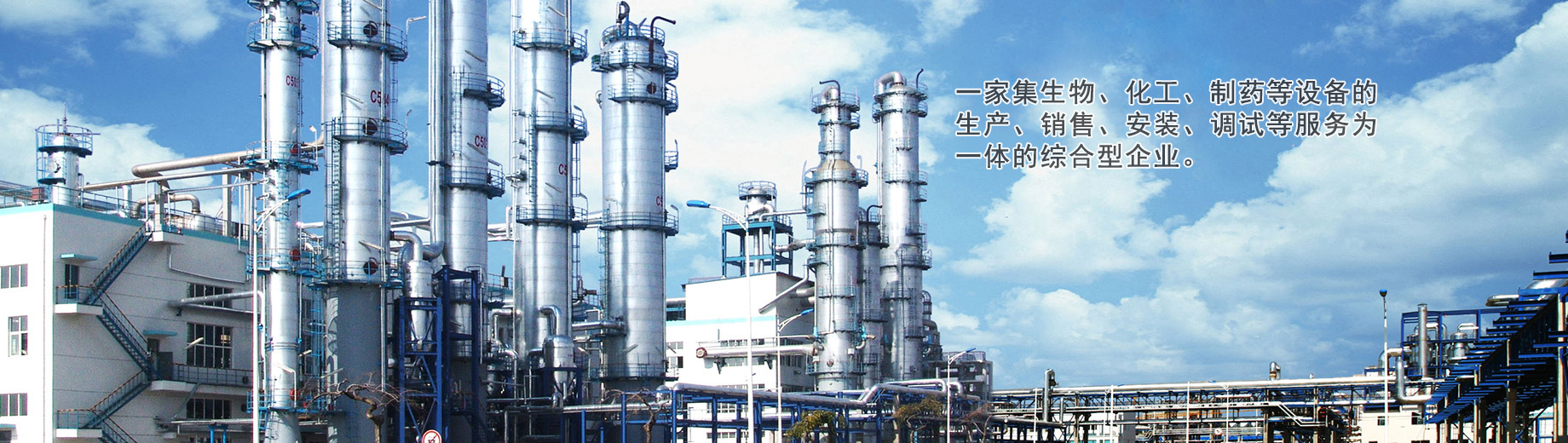
 Storage tanks and tower series